
Tim Wendelboe Coffee Review: Oslo's World Champion Roaster

Key takeaways
Tim Wendelboe won the World Barista Championship in 2004 and the World Cup Tasters Championship in 2005 — then opened a tiny espresso bar in Oslo in 2007.
The roastery is famous for ultra-light 'Nordic' roasts, single-origin only, roasted to order every week.
Since 2019 Tim has run his own farm in Colombia, Finca El Suelo — named after the soil, because that's what he's actually farming.
Everything ships worldwide from Oslo, and the company publishes exactly what it pays every farm.
There's a coffee bar in Oslo roughly the size of your kitchen. Eight seats, give or take. People fly in from other countries to sit in one of them. That's not normal behaviour — unless the name above the door is Tim Wendelboe.
If you've spent any time in specialty coffee, you've heard the name. If you haven't: this is the story of how one Norwegian barista helped invent the way light-roast coffee tastes today, won basically everything there is to win, and then bought a farm in Colombia to learn how to grow the stuff himself. You can browse every Tim Wendelboe coffee on Cuppd while you read — there are 17 of them in the catalog right now.

From Oslo barista to world champion
The story starts in 1998, when a 19-year-old Tim got a barista job at Stockfleths, one of Oslo's old-school coffee chains. Most people treat a barista job as a stopover. Tim treated it like training camp.
He won the Norwegian Barista Championship three times (2001, 2002, 2004). He came second at the World Barista Championship twice — 2001 and 2002 — which has to sting. Then in 2004, in Trieste, he won the whole thing. World Barista Champion. A year later he added the World Cup Tasters Championship, which is exactly what it sounds like: a competition where people identify coffees by taste alone, fast, in front of an audience.
Cup Tasters: a competition where you get sets of three cups — two identical, one different — and have to pick the odd one out by taste, against the clock. The best in the world do it in seconds.
In 2007, after a stint as a freelance trainer, he opened his own espresso bar at Grünersgate 1 in Grünerløkka — June 30th, if you want to mark the anniversary — and started roasting coffee to order, every week. The roastery has since moved to a bigger space at Tøyengata, but the original bar is still there, still tiny, still packed.
The lightest roasts you'll ever defend to your dad
Tim Wendelboe is one of the roasters that defined the 'Nordic roast' — coffee roasted so light that people raised on dark Italian espresso genuinely think there's been a mistake at the factory. There hasn't. The point is to taste the farm, the variety, and the processing instead of the roaster's smoke.
Nordic roast: a very light roast style popularised by Scandinavian roasters. Expect tea-like body, bright acidity, and flavours like blackcurrant or florals — not chocolate and char.
The rules of the house are strict and haven't changed in nearly two decades: single origins only, no blends hiding anything, no dark roasts, and nothing roasted until someone has actually ordered it. Your bag gets roasted in Oslo the same week it ships.
The sourcing is just as opinionated. The company buys directly from farms in Kenya, Ethiopia, Colombia, Honduras and El Salvador, visits them every year, and publishes transparency reports listing what it paid each producer. Not vague 'fair price' language — actual numbers, publicly, every year.
The farm named after dirt
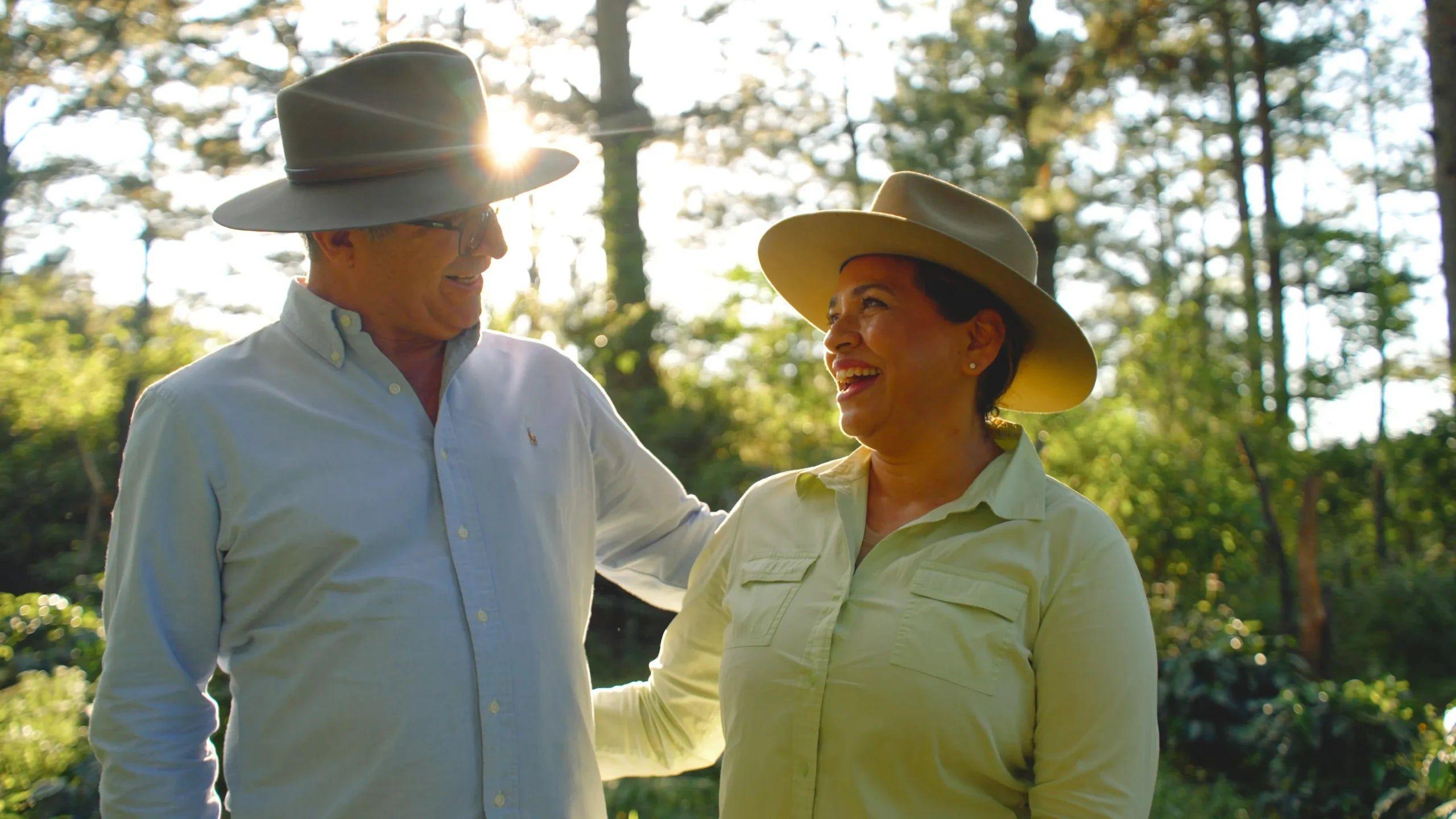
In 2019, Tim did the thing most roasters only talk about at 2am: he bought a farm. Finca El Suelo sits at around 1,650–1,700 metres in Huila, Colombia, right next to Finca Tamana — the farm he's worked with for years. It's seven hectares, planted with Ethiopian landrace varieties and some Geisha.
Landrace: a coffee variety that evolved naturally in a region (usually Ethiopia) rather than being bred in a lab. Think heirloom tomatoes, but for coffee.
The name is the mission statement. 'El suelo' means 'the soil' — because Tim's take is that he isn't farming coffee, he's farming soil that happens to have coffee planted in it. The whole project runs on regenerative agriculture: compost instead of synthetic fertiliser, feeding the soil biology, and documenting everything so other farmers can copy what works. It's part farm, part public science experiment.
Not a one-man show anymore
The name on the bag is one guy, but Team Wendelboe is around two dozen people across the roastery, the espresso bar and the webshop — baristas, roasters, a COO keeping the whole thing running, and a wholesale team supplying cafés and restaurants. Tim himself still does the green coffee buying and the farm visits, which is exactly where you want the founder of a company like this to be.
The coffees to actually try
Seventeen Tim Wendelboe coffees are in the Cuppd catalog, and honestly, there isn't a dud in there. But here's a sensible tour.
Start with Kenya and Ethiopia. The Kenyan lots — like Gachatha and Kapsokisio — are the house's calling card: blackcurrant, juicy, the kind of cup that converts people to light roast on the spot. Echemo from Ethiopia comes in both filter and espresso versions.
Kenya & Ethiopia — the classics


Then go to Colombia. Finca Tamana is the long-running partnership that changed how the company buys coffee, and Finca El Suelo is Tim's own farm — drinking it is as close as you get to tasting the regenerative-farming experiment yourself.
Colombia — Finca El Suelo & Finca Tamana


Finish with the wildcard farms. Los Pirineos in El Salvador supplies Pacamara in more processing variations than seems reasonable, plus a Geisha and a naturally low-caffeine Laurina. Finca El Puente in Honduras rounds out the lineup.
El Salvador & Honduras — the wildcards


If you're torn between two of them, Cuppd's community tasting notes are exactly for this — see what other people actually tasted before you commit to a bag.
Where to get it
- In Oslo: the espresso bar at Grünersgate 1, Grünerløkka. Small, busy, worth it.
- Everywhere else: the webshop at timwendelboe.no ships worldwide from Oslo with DHL Express, roasted to order weekly. There's also a subscription if you'd rather never think about reordering.
- Locally: select specialty retailers and cafés across Europe and Asia carry the coffees — availability rotates, so the webshop is the reliable route.
Fun fact
Every year the company publishes a transparency report listing exactly what it paid each farm for each lot. Tim also hosts a podcast where he interviews the farmers themselves — including an episode about his own farm, where he's the guest.
Should you order a bag?
If you like your coffee dark, oily and nostalgic — honestly, maybe not. But if you've ever wondered what people mean when they say a coffee tastes like blackcurrant, this is the roastery that will show you, with receipts. Pick a Kenyan lot, brew it as filter, and rate what you find on Cuppd. Worst case, you've had a world champion's coffee. There are worse Tuesdays.